
Placed on: 19 - 08 - 2025
US compliance minefield: STIR/SHAKEN & traceback
Enforcement just showed its teeth
Last week the FCC removed 185 voice providers from the Robocall Mitigation Database (RMD) and told all U.S. carriers to stop accepting their traffic. That’s not a headline for someone else—it’s routing tables, customer tickets and SLAs across the industry.
First things first: what is the RMD?
Think of the RMD as the FCC’s public “trust registry” for voice providers. You list who you are and how you stop illegal calls—STIR/SHAKEN status plus your mitigation plan. Downstream carriers rely on it to decide whether to carry your traffic. The FCC has tightened how the RMD works over the last year to make it more reliable.
Why were 185 providers ejected?

STIR/SHAKEN is a play on how James Bond likes his cocktails.
In short: incomplete or non-compliant filings, and failure to fix them after warning. The Bureau first told thousands of companies in late 2024 to cure specific problems—such as missing mitigation plans or missing newly required details in the certification—or risk removal. Many didn’t cure, so they were taken out and their traffic became blockable.
Put simply: if your entry isn’t accurate, complete, and kept up to date, you’re not “in good standing”—and the rest of the industry is instructed to block your calls.
The two pillars behind the rules—explained simply
1) STIR/SHAKEN.
This is caller-ID ‘proof of origin.’ Your network signs each call and marks how well you know the caller and the number:
- A — you know the customer and the number they’re using
- B — you know the customer or the number, but not both
- C — you’re just a pass-through
Large U.S. carriers feed these signals into analytics that decide whether a call is delivered, labelled “Spam Likely,” or blocked. Your job is to keep the original attestation intact across the chain: no stripping, downgrading, or re-signing without reason.
2) Traceback.
When the Industry Traceback Group (ITG) asks “where did this call come from?”, you must answer quickly and accurately. Today that means responding within 24 hours and cooperating up the chain. Ignore it, and you can be blocked on notice.
What else changed in 2025 that affects you
- DNO (Do-Not-Originate) blocking expanded. All providers in the call path—not just gateways—must block calls that appear to come from numbers that should never place calls (invalid, unallocated, or numbers whose owners asked for blocking).
- Clearer signaling on blocked calls . Terminating carriers must give standardized SIP feedback so legitimate callers can diagnose errors faster.
A simple checklist to stay off the block list
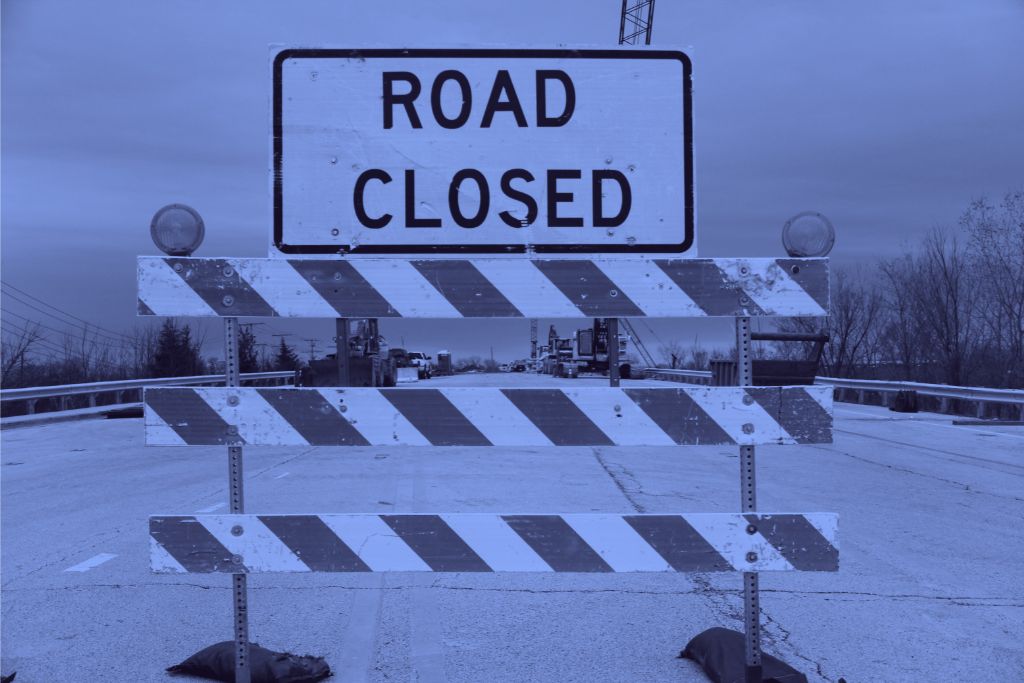
Traffic of 185 carriers is effectively blocked in the USA following the FCC decision
- Open your RMD entry and read it line by line. Is it complete, accurate, and aligned with current rules? If not, fix it immediately and calendar regular reviews.
- Preserve the STIR/SHAKEN chain. Contractually forbid header stripping or attestation downgrades by intermediates. If you must re-sign, document why. For a buyer’s view, see our guide: 5 red flags when choosing a US voice carrier.
- Automate traceback response. Route ITG tickets to an always-on queue and track 24-hour turnaround.
- Enforce DNO in real time. Use a “reasonable DNO” list and show customers why a call was blocked to prevent support spirals.
Know your upstream. Periodically re-verify the providers you buy from—business info, mitigation practices, traceback performance—so their problems don’t become your outage. For a practical approach, see 5 red flags when choosing a US Voice partner.
Compliance isn’t a checkbox—it’s infrastructure
FCC’s recent removals confirm the direction of travel: trust but verify. At RGTN we treat compliance like uptime—monitored, automated, and continually updated—so your calls keep ringing and avoid calls being labeled “Spam Likely.”
If all of the above gives you a headache, get in touch. With RGTN “compliance as a service” we take care of your compliance, so you don’t have to. See if you qualify.
Related posts

Your calls deserve better than “Scam Likely” Picking a voice carrier sounds simple—until angry customers report dropped calls, or worse, see your caller-ID [...]
A sharp rate deck tells you what a partner promises. But it doesn’t tell you what’s behind the traffic they -or you- deliver. In [...]
Cutting a fraction of a cent off your per‑minute rate feels like a win—until the invoices stop matching reality. A Tale of Two Carriers [...]
If you buy US voice at scale, you already know this industry isn't short on promises. "Lowest rates guaranteed." "Tier 1 routes only." [...]


